"Take heed to thyself, lest thou make a covenant with the inhabitants of the land whither thou goest, lest it be for a snare in the midst of thee...Lest thou make a covenant with the inhabitants of the land, and they go a whoring after their gods, and do sacrifice unto their gods, and one call thee, and thou eat of his sacrifice; And thou take of their daughters unto thy sons, and their daughters go a whoring after their gods, and make thy sons go a whoring after their gods.'' (Ex. 34:12,15,16.)
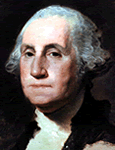
"The great rule of conduct for us in regard to foreign nations is, in extending our commercial relations to have with them as little political connection as possible. So far as we have already formed engagements let them be fulfilled with perfect good faith. Here let it stop....
"It is our true policy to steer clear of permanent alliances with any portion of the foreign world, so far, I mean, as we are now at liberty to do it; for let me not be understood as capable of patronizing infidelity to existing engagements. I hold the maxim no less applicable to public than to private affairs that honesty is always the best policy. I repeat, therefore, let those engagements be observed in their genuine sense. But in my opinion it is unnecessary and would be unwise to extend them.
|
|
"Taking care always to keep ourselves by suitable establishments on a respectable defensive posture, we may safely trust to temporary alliances for extraordinary emergencies.'' (President George Washington's Farewell Address, September 17, 1796).
The Constitution of the United States provides for the establishment of treaties with foreign nations and its wording in this matter is generally in agreement with President Washington's comments in his address. However, most recent presidents (not just Clinton) have gone far beyond what our founding fathers contemplated. Hardly a month goes by but what the president signs another treaty with some foreign power and generally it will be relative to commercial interests.
The most comprehensive set of treaties of recent years has been relative to the United Nations. This, too, is primarily of commercial importance; in this case the systematic removal of the production capacities of the United States and the moving of them to third world countries. Thus, the great trend is toward the reduction of the citizens of the United States to a third world status while, at the same time elevating some present third world nations into powerful political entities. All of this is done for commercial interests, that of making huge sums of money for the monopolized few at the expense of the citizens.
To further complicate this already delicate situation, as revealed by George Washington in his Farewell Address, modern American presidents are using international treaties for a rather sinister purpose. Because of the peculiar wording in the U.S. Constitution regarding the making of treaties, our federal government is using them to create laws, which subject the citizens of this country to a system that the state and local governments do not want. This technique will be explained in some detail in this issue.
It is sad to see many of our patriots (that is not an ugly word as is currently alleged!) carrying a copy of the Constitution around and trying to teach our people that the current rash of laws does not apply! Unfortunately, most of them do apply under the current circumstances. But there is a way to reverse this un-Godly and un-American situation. That, too, will be explained in this issue.
But first, just what is a treaty? Throughout history these contractual arrangements have gone by several names. The word testament is a form of a treaty. The word covenant has often been used and the word contract itself can be used to define a treaty. Sometimes the word oath is used to depict a treaty.
A treaty is a solemn promise made binding by an oath, which may be in verbal form or a symbolic action. The action is recognized by both parties as the formal act which binds each party to fulfil his promise. Treaties may be between parties of different socio-political groups which creates a relationship between them regulated by the terms of the treaty. Treaties usually have the sancions of a religious nature, thus we can see the admonition of God quoted in the verses found in Exodus 34. When there is more than one god involved in the treaty, the chances of trouble arising are great.
Archeological excavations have discovered that treaties were used in ancient times from about the third millennium B.C. in the Summerian areas. The Hittite Empire of the Late Bronze Age (1400-1200 B.C.) has provided the most useful information of the types of treaties in practice at that time. These types are still used to this day. There is no evidence of any treaty being made which binds the parties in perpetuity.
There are two general classifications of treaties or covenants. One is the Secular Covenant and the second is the Covenant in which God is involved. Since the issues at hand are the Secular Covenants, we will limit ourselves to those in our definitions. There are four types of Secular Treaties.
(1.) Suzerainty. In this type of treaty the superior nation binds the inferior nation to obligations defined by the superior. Though the suzerainty treaties binds only the one inferior in power, the superior nevertheless gives up some degree of freedom of action. His relationship to the vassal is not based on force alone, once a treaty has been established. He makes stipulations required of the vassal and no further actions are required.
(2.) Parity. In this type of treaty both parties are bound to the agreement by oath. Parity treaties can be further divided into two types, the first being a treaty where specific obligations are imposed and the second being a treaty to preserve the peace between two parties. The covenant made with the Gibeonites (Josh. 9:3-27) started out to be a simple parity treaty. It was then changed to a suzerainty treaty by the consent of the Gibeonites because the oath made by the Israelites was obtained by misrepresentation. Thus the Gibeonites were bound by treaty to be the inferior party as demanded by the Israelites.
This suzerainty treaty between the Gibeonites and Israel serves as a good example of why the law as found in Exodus 34 prohibits such actions. The treaty relationship between the Gibeonites and Israel were sworn to by Canaanite dieties as well by God as was the normal method. The relationship thus formed resulted in the acceptance of the Canaanite religious values by the Israelite towns. That is exactly what is happening today with this current trend of obligating our people to treaties with nearly every country in the world regardless of their customs, mores and religion. The fact still remains, a nation's faith determines its form of government.
With that brief description of treaties, both from the historical and Biblical perspectives, we can discuss the main thrust of this issue. How do international treaties become involved with national, state and local laws, rules and regulations? On what authority did our national government create the "alphabet soup'' of bureaus and administrations. How could this country cause citizens to be fined and imprisoned for breaking a "rule'' or "regulation'' instead of a law?
All of this became common place following World War II. This writer remembers the period right after the war when rules and regulations became the "in thing.'' We were taught in Civics classes in school that we responded to laws and there was very little discussion, if any, about regulations. We oftentimes said, "We are not bound by rules and regulations. We live according to laws promulgated by legislative action.'' How wrong we were!
There is an excellent set of publications prepared by Mr. Lowell H. Becraft, Jr. who is a practicing Constitutional Attorney located in Huntsville, Alabama. He is a Christian and works closely with Christians in need of Constitutional advise in this ongoing battle to return this nation to that of a Christian Republic. His articles have been published in Media Bypass Magazine. Because of the subject matter of recent issues of the Intelligence Newsletter, Mr. Becraft was so kind as to send us copies of his work. For the purpose of teaching us how Federalism in this nation has become completely out of control, we are including some of his articles.
Remember, Federalism does not denote "right wing'' or "conservative'' necessarily. Federalism means strong central government as compared to a strong state and local government. It is said that Communism is a monopoly. So is Federalism.
"Within the last several years, many people have been utterly astonished at the phenomenal growth and influence of the so-called environmental movement. From its `salad days' of the early seventies, this movement has blossomed so quickly that it now has the visible support of giant corporations and powerful political figures, including the former alleged environmental President, George Bush, as well as that shining star in the Democratic Party, Vice-President Al Gore. Two years ago, the controlled media deluged us with coverage of the importance of the Rio Summit and when it happened, it became the third most discussed media event of that year just behind the elections and the Olympics. There appears to be a hidden agenda behind the environmental movement with its promotion of an environmental treaty.
"Quite obviously, environmental legislation is inherently the proper subject of legislation by the state, and many states currently have such acts in effect within their jurisdiction. At the federal level, the jurisdiction of the United States is constrained by the operation of Art. 1, p8, cl. 17 of the U.S. Constitution, and the multitude of decided cases regarding this part of the Constitution declares that the United States has territorial jurisdiction solely within Washington, D.C., the federal enclaves inside the States, and the territories and insular possessions of the United States. The possession of territorial jurisdiction is essential under this constitutional provision for federal municipal law such as environmental legislation to apply. Within the territories and possessions of the United States, the federal government possesses power similar to that of a state legislature; see Berman v. Parker, 348 U.S. 26, 31, 75 S.Ct. 98, 102 (1954); and Cincinnati Soap Co. v. United States, 301 U.S. 308, 317, 57 S.Ct. 764, 768 (1937). Therefore, municipal environmental legislation enacted by Congress could readily apply in these areas within the jurisdiction of the United States. And logically, a consideration of solely this part of the Constitution would dictate a conclusion that federal municipal law could apply only within those areas subject to the jurisdiction of the United States.
"A ready example of a case so holding is United States v. Shauver, 214 F. 154, 160 (E.D.Ark. 1914), which concerned the issue of where the Migratory Bird Act of March 1914 could apply. Via this act, Congress sought to extend protection to migratory birds by limiting the hunting season and otherwise placing restrictions upon hunting of these birds. As is only natural, upon adoption of this act federal law enforcement officials started strenuously enforcing it and here they had arrested Shauver in Arkansas for shooting and killing migratory birds. Shauver moved to dismiss the indictment filed against him on the grounds that the act contravened the 10th Amendment by invading the jurisdiction of the states upon a matter historically reserved for legislation by the states. In deciding that this act was unconstitutional, Judge Trieber noted that the common law provided that the states essentially owned the birds within their borders and state legislation was the sole source by which contreol of hunting could be accomplished. In so concluding, he held:
"`It is the people who alone can amend the Constitution to grant Congress the power to enact such legislation as they deem necessary. All the courts are authorized to do when the constitutionality of a legislative act is questioned is to determine whether Congress, under the Constitution as it is, possesses the power to enact the legislation in controversy; their power does not extend to the matter of expediency. If Congress has not the power, the duty of the court is to declare the act void. The court is unable to find any provision in the Constitution authorizing Congress, either expressly or by necessary implication, to protect or regulate the shooting of migratory wild game in a state, and is therefore forced to the conclusion that the act is unconstitutional.'
"Notwithstanding Judge Trieber's decision, enforcement of the act did not stop and it was thereafter enforced within Kansas, where a fellow named McCullagh was arrested for killing migratory birds. In United States v. McCullagh, 221 F. 288, 293 (D.Kan. 1915), the issue of the Constitutionality of the Migratory Bird Act of 1913 was again before a different court and it, relying upon its own research of the law as well as the decision in Shauver, likewise concluded that this act was unconstitutional:
"`The exclusive title and power to control the taking and ultimate disposition of the wild game of this country resides in the state, to be parted with and exercised by the state for the common good of all the people of the state, as in its wisdom may seem best.'
"Consideration of the above cases, which appear to be the only ones of that period, leads to the conclusion that some powerful federal officials desired to seek the enactment of this law to expand the scope of federal authority; the laboratory experiment selected for determining whether the judiciary would declare that Congress possessed power to control hunting was started within the heartland of America, Arkansas and Kansas. But here, those seeking greater federal power met their defeat, at least temporarily. To secure such power, these parties went back to the drawing board and what they developed did give them the power they sought.
"In 1916, the United States and Great Britain, on behalf of Canada, adopted the Migratory Bird Treaty and thereafter Congress in 1918 passed another Migratory Bird Act to implement the provisions of the treaty, this act being slightly improved over the previous version as experience would thus dictate. As this occurred, federal law enforcement officials again started to enforce the new act in another experiment to determine whether this time, because of the treaty, they had achieved the municipal power they so dearly loved. Again, they started enforcement activities within Arkansas and the case they developed was again assigned to Judge Trieber.
"Within Arkansas in 1919, a man named Thompson was arrested for shooting these protected migratory birds and this case was assigned to the very same judge who had rendered the decision in Shauver, supra; see United States v. Thompson, 258 F.257 (E.D.Ark. 1919). Here, thinking he had a very favorable judge, Thompson raised the very same argument as Shauver which had previously proved successful in front of Judge Trieber. But this time around, things were different and the federales were acting upon the authority of a treaty and this one change within the law dictated an entirely different result. In upholding the act and thus its application within the jurisdiction of Arkansas, Judge Trieber carefully analyzed the prior decisions rendered by the Supreme Court, which illustrated the operation of treaties and the same could abrogate state laws:
"`Law can only prescribe the conduct for the people within the jurisdiction of the lawmaker, while treaties are to affect rights and privileges of subjects of foreign countries and of our citizens in such countries. Treaties are reciprocal, and in all instances the same rights and privileges are granted to the citizens and subjects of each of the contracting parties in the respective countries,' Id., at 258.
"`To subject the treaty power to all the limitations of Congress in enacting the laws for the regulations of internal affairs would in effect prevent the exercise of many of the most important governmental functions of this nation, in its intercourse and relations with foreign nations, and for the protection of our citizens in foreign countries. The states of the the Union may enact all laws necessary for their local affairs, not prohibited by the national or their own Constitution; but they are expressly prohibited from entering into treaties, alliances, or confederations with other nations. If, therefore, the national government is also prohibited from exercising the treaty power, affecting matters which for internal purposes belong exclusively to the states, how can a citizen be protected in matters of that nature when they arise in foreign countries,' Id., at 263.
"`Even in matters of a purely local nature, Congress, if the Constitution grants it plenary powers over the subject, may exercise what is akin to the police power, a power ordinarily reserved to the states,' Id., at 264.
"Judge Trieber concluded that this treaty thus provided Congress with a power of municipal legislation and that treaty and its implementing act plainly operated within the state of Arkansas. A different case originated within Missouri, United States v. Samples, 258 F. 479 (W.D.Mo. 1919), ultimately found its way to the U.S. Supreme Court where an identical conclusion was reached; see Missouri v. Holland, 252 U.S. 416, 434, 40 S.Ct. 382, 384 (1920), which stated, `No doubt the great body of private relations usually fall within the control of the State, but a treaty may override its power.' See also United States v. Selkirk, 258 F. 775 (S.D. Tex. 1919); United States v. Rockefeller, 260 F. 346 (D. Mon. 1919); and United States v. Lumpkin, 276 F. 580 (N.D. Cal. 1921).
"After it was determined that the Migratory Bird Treaty thus provided a municipal power to the United States to control hunting even within the jurisdiction of a state, the next issues which arose were whether regulations under both the act and treaty were valid, the arguments made against the regulations being that the treaty was limited in scope and thus could not support very detailed regulations concerning hunting activities, which simply had to be unconstitutional as a consequence.
"In 1936, another treaty was made with Mexico and apparently regulations were adopted which more strenuously controlled hunting of migratory birds, these regulations covering such details as whether birds could be baited with grain. In Cochrane v. United States, 92 F.2d 623 (7th Cir. 1937), the defendants were members of a duck club and employees of the club placed duck decoys upon and sprinkled corn within the waters around the club located on an inland lake in Illinois. Unfortunately, the defendants sprang up and shot ducks from a blind on the edge of the lake at a time when the federales were looking, and they were arrested for killing ducks. In defense, these parties contended that the regulations invaded the reserved rights of the states protected via the 10th Amendment and that the regulations were beyond the scope of the treaties. But, the Seventh Circuit summarily rejected these arguments finding that the regulations were valid both under the treaties as well as the interstate commerce powers of Congress.
"In Cerritos Gun Club v. Hall, 96 F.2d 620 (9th Cir. 1938), the operators of a hunting club were informed that if they performed activities regularly conducted within the past of baiting birds with grain before the start of the federally approved hunting season, they would be prosecuted for violating new regulations. The club sued to enjoin enforcement, but the Ninth Circuit concluded similarly as in Cochrane. In United States v. Reese, 27 F.Supp. 833 (W.D.Tenn. 1939), the federal act and regulations which protected `these feathered friends of mankind' were held valid and enforceable within that state.
"In Bailey v. Holland, 126 F.2d 317 (4th Cir. 1942), the United States established a bird refuge off the coast of Virginia, that refuge consisting of waters within a bay as well as a small plot of land that the U.S. had purchased. But, a regulation was promulgated which closed adjoining lands to hunting and a duck club adversely affected sued to enjoin implementation of that regulation. In rejecting the club's argument, it was concluded that the bird treaties empowered the feds to enact these regulations even though they had operation upon private lands within state jurisdiction.
"In 1912, the Senate adopted the International Opium Convention and Congress might have enacted about the same time legislation to implement it. If it did, the implementing act failed to mention that its authority was derived from the treaty. In any event, an act controlling distribution of opium became the basis for the indictment of a man who was merely possessing opium and a dismissal of his indictment went before the Supreme Court. In United States v. Jin Fuey Moy, 241 U.S. 394, 36 S.Ct. 658 (1916), the Court had before it the validity of this act which operated within the jurisdiction of the state and it held that dismissal of the indictment was mandated because the act invaded the juisdiction of the state. In an attempt to save the act and the indictment against this defendant, the government surprisingly argued that the act, although silent on the point, was really one, which implemented the Opium Convention. Nonetheless, the Court concluded that the failure of the act to state its premise within the Convention precluded its application on the grounds asserted by the government.
"This case would appear to hold that any act implementing a treaty must of necessity statutorily identify the treaty as the basis for the act. As an example, the Genocide Treaty was adopted in the spring of 1987; it was implemented by the Genocide Convention Implementation Act of 1987, P.L. 100-606, 102 Stat. 3045m which created 18 U.S.C., p1091. However, the fact that in this case the Government asserted a treaty basis for the act notwithstanding the lack of statutory language at least indicated that other acts, which really implement a treaty may likewise be silent as to the source for such legislation.
"See also United States v. Ah Hung, 243 F. 762, 764 (E.D.N.Y. 1917) (`Mere possession of an article injurious to health would not render a person liable to a United States statute unless some constitutional basis for the statute gives the United States the right to regulate upon the subject').
"Some years later, the 1912 International Opium Convention was supplemented by a similar convention of 1931, which was thereafter implemented by appropriate legislation designed to control the production of poppy within this country. In Stutz v. Bureau of Narcotics, 56 F.Supp. 810, 813 (N.D.Cal. 1944), some poppy growers sought an injunction to the enforcement against them of the provisions of the act implementing the convention, the argument which they made being that the act invaded the reserved powers of the states in contravention of the 10th Amendment. In rejecting such argument and holding that the act applied within the jurisdiction of California, the court declared:
"`The competency of the United States to enter into treaty stipulations with foreign powers designed to establish, through appropriate legislation, an internationally effective system of control over the production and distribution of habit forming drugs is not questioned. The obligations of the United States incurred as a party to the two Conventions heretofore mentioned were lawfully undertaken in the proper exercise of its treaty making power. And Congress is constitutionally empowered to enact whatever legislation is necessary and proper for carrying into execution the treaty making power of the United States.'
"The above discussion is not an attempt to fully explain the treaty powers of Congress and all that is offered is a ready example of their operation. Here, municipal legislation designed for application within the states concerning migratory birds as well as drugs has been shown to be typically beyond the power of Congress. But, give Congress a treaty and allow it to enact laws for its enforcement and it does acquire the municipal power to control intrastate activities.
"The United States has a tremendous external power; see United States v. Curtiss-Wright Export Corp., 299 U.S. 304, 57 S.Ct. 216 (1936); and United States v. Peace Information Center, 97 F.Supp. 255 (D.D.C. 1951). Even the United Nations Charter is a treaty; see Balfour, Guthrie and Co. v. United States, 90 F.Supp. 831 (N.D.Cal. 1950); and SeiFujii v. State, 242 P.2d 617 (Cal.1952). There are decisions holding that this power does not permit what the constitution forbids; see Amaya v. Stanolind Oil and Gas Co., 158 F.2d 554 (5th Cir. 1946); Farmer v. Roundtree, 149 F.Supp. 327 (M.D.Tenn. 1956); and Pierre v. Eastern Air Lines, Inc., 152 F.Supp. 486 (D.N.J. 1957). Yet, it is likewise clear that no definitive limits have been decided regarding this extensive power.
"The former U.S. Attorney General William Barr acquired his position by realizing the extent of this external power of the United States. It was his advice which authorized the invasion of Panama to secure the capture of General Noriega and this precisely catapulted him into that hight office. His office secured that decision of the Supreme Court holding that the Fourth Amendment does not apply to searches of homes by federal officials within Mexico; see United States v. Verdugo-Urquidez, __U.S. __, 110 S.Ct. 770 (1990). Within the last few years, this external power of the United States was declared to be the basis for lawfully kidnapping parties in other countries; see United States v. Alvarez-Machian, __U.S. __, 112 S.Ct. 2188 (1992).
"All of this is a harbinger of things to come. Is it not easy to contemplate what must be currently in the minds of people such as Bill Barr and the heads of a multitude of federal agencies? As always, these agencies seek aggrandizement with power and authority, yet based upon the delegated powers of the U.S. Constitution, they cannot directly achieve total power. But what is shown above demonstrates that the federales could potentially feign a treaty with Guam and thus secure municipal power. But why should they stoop so low with such a trick? What they inherently desire awaits them at their footsteps with the more facially legitimate environmental treaties which surely will flow from the Rio Summit.'' That is the end of Mr. Becraft's article titled "Treaties, A Source for Federal Municipal Power.''
There is no question but what the clauses in the United States Constitution regarding the use of treaties with other nations is necessary and proper if we are to be a civilized nation within a family of such nations. We see that it is Biblically and historically correct to conduct our national affairs in such a manner. It should likewise be obvious that only when we behave as a Christian Nation will the system work. When we allow sinister and greedy leaders to represent our government within the community of governments, we can expect to suffer as a people. Such is the situation today in our beloved country.
Mr. Becraft continues in his effort to educate Christian Americans in this gross misuse of Constitutional power. In his first article he revealed the history of how international treaties became used to create municipal law at the state and county level. In his showing the time frame in which this misuse of constitutional power became commonplace, we can realize that as long as Federalism was held in check by the states and local governments our personal liberty and freedoms were secure. It was only after we were taught in our schools, churches and media that "everything would operate best when controlled at the federal level,'' did we decay into monopoly capitalism (monopoly communism).
In succeeding articles he showed how these treaties created the bureaucratic, "alphabet soup'' of the multitude of federal agencies. The DEA, FBI, BATF, FCC, FFA, FDA, BLM, etc., adnauseum. Because of space limitations, we will not reproduce his excellent treatises in their entirety but rather extract the principals.
"By statute, all federal agencies must confine their activities to the jurisdiction delegated to them; see 5 U.S.C., p558. While this is a simple statutory command, there is an evident problem in that most federal agencies fail to publish any statements, either in the C.F.R. or some other source, which define their jurisdiction in clear and express terms. The C.I.A. is one agency where it is easy to determine its jurisdiction because a statute has deprived it of any domestic jurisdiction; see Weissman v. C.I.A., 5645 F.2d 692, 696 (D.C. Cir. 1977). However, to determine the jurisdiction of other agencies requires some study.
"Perhaps the best way to determine the jurisdiction of any given federal agency is to examine various cases regarding the subject matter of that agency. For example, the United States Constitution does not provide that Congress has any authority concerning the fish and wildlife within this country and this has been previously litigated with obvious results. In McCready v. Virginia, 94 U.S. 391, 394, 395 (1877), the Supreme Court held regarding the fish within the oceans:
"`The States own the tidewaters themselves and the fish in them, so far as they are capable of ownership while running.'
"`The title thus held is subject to the paramount right of navigation, the regulation of which, in respect to foreign and interstate commerce, has been granted to the United States. There has been however, no such grant of power over the fisheries. These remain under the exclusive control of the State...'
"Like fish, the Constitution simply grants no authority to the federal government to control the wildlife within the states of this nation and this is noted in several cases. A ready example of such a case is United States v. Shauver...'' (The details of this case were shown earlier as well as a second example titled United States v. McCullagh. Please reread those to fully understand the principals.-Ed.) Then Mr. Becraft reveals the results of treaties.
"The Fish and Wildlife Service's constitutional authority thus arises from treaties. After the adoption of several fishing treaties, Congress created the U.S. Fisheries Commission; see 16 Stat. 594. When the migratory bird treaties were ratified, this agency apparently acquired authority over migratory birds. Later, the Convention on International Trade in Endangered Species of Wild Faun and Flora was adopted in 1973; see 27 U.S.T. 1087. As a result of this treaty, on December 28, 1973, Congress enacted the Endangered Species Act,' 87 Stat. 884. Several cases have noted that the power to control endangered species arises from this treaty; Palila v. Hawaii Dept. of Land and Natural Resources, 471 F.Supp. 985 (D. Haw. 1979); Utah v. Marsh, 740 F.2d 799 (10th Cir. 1984); and Leslie Salt Co. v. United States, 896 F.2d 354 (9th Cir. 1990). The wetlands convention was ratified in 1986 and about 30 days later, Congress adopted the `Emergency Wetlands Resources Act of 1986,' 100 Stat. 3582. It is clear that the U.S. Fish and Wildlife Service's authority arises from these treaties and this agency thus has an `international' jurisdiction. The U.S. Fish and Wildlife Service is as much a treaty based agency as the Great Lakes Fishery Commission (16 U.S.C., p931), and the Pacific Salmon Commission (16 U.S.C., p3631).
"...What about the DEA and FDA? Control over the possession and sale of any item within the states is not a power possessed by Congress. This was so held in United States v. DeWitt, 76 U.S. 41, 45 (1870), which tested the constitutionality of a federal revenue act making it illegal to sell illuminating oil of a certain flammability. Here, the Court held that Congress did not have the power to penalize these sales:
"`As a police regulation, relating exclusively to the internal trade of the States, it can only have effect where the legislative authority of Congress excludes, territorially, all state legislation, as, for example, in the District of Columbia. Within state limits, it can have no constitutional operation.'
"More than 40 years later, Congress enacted a federal drug law designed to make criminal the possession of contraband drugs like opium. Based upon the decision in DeWitt, the Supreme Court held in United States v. Jin Fuey Moy, 241 U.S. 394 (1916), that Congress did not have power to make penal mere possession of drugs within the states. These two cases have never been reversed, so how did we get the DEA? Like the Fish and Wildlife Service, the origins of this federal agency is also in treaties.
"In 1912, the Senate adopted the International Opium Convention, see 38 Stat. 1912. Later, this convention was supplemented by a similar convention of 1931, the Multilateral Narcotics Drugs Convention, ratified on March 31, 1932, 48 Stat. 1543, which was thereafter implemented by appropriate federal legislation designed to control poppy production within this country. In Stutz v. Bureau of Narcotics, 56 F.Supp. 810, 813 (N.D.Cal. 1944), some poppy growers sought an injunction to enforcement against them of the provisions of the act implementing the convention, their argument being that the act invaded the reserved powers of the states in contravention of the Tenth Amemdment. In rejecting this argument and holding that the act applied within the jurisdiction of California, the court declared:
"`The competency of the United States to enter into treaty stipulations with foreign powers designed to establish, through appropriate legislation, an internationally effective system of control over the production and distribution of habit forming drugs is not questioned. The obligations of the United States incurred as a party to the two Conventions heretofore mentioned were lawfully undertaken in the proper exercise of its treaty making power, And Congress is constitutionally empowered to enact whatever legislation is necessary and proper for carrying into execution the treaty making power of the United States.'
"Other cases have also noted that control over drugs by the federal government arises from these treaties; see United States v. Rodriques-Camacho, 468 f.2d 1220 (9th cir. 1972); and NORML v. Ingersoll, 497 f.2d 654 (D.c.cir. 1974), later opinion at 559 f.2d 735 (D.C.Cir.(1977). The jurisdiction of the DEA is therefore based upon these drugs treaties and it thus has an international jurisdiction. Henry Hudson, Randy Weaver's defendant and the former head of the Marshal's Service, stated as much on his Sunday afternoon radio show in the D.C. area back in March of this year.
"The power of the DEA to control `bad' drugs such as opium and cocaine is constitutionally indistinguishable from the similar power of the FDA to control other `drugs' such as Vitamin B and shark cartilage. If the DEA is a treaty based federal agency, is it not possible that so is the FDA? As you might expect, the authority of the FDA arises from a 1906 international Agreement for Unification of Pharmacopeial Formulas for Potent Drugs.'' This is the end of Lowell H. Becraft's treatises. He may be contacted at 209 Lincoln Street, Huntsville, AL 35801.
In this writer's opinion, this gives us a tremendous insight into what has been classically termed the fight between Federalism and States Rights. It would appear that the early citizens did not intend this gross usurpation of States Rights and the parallel freedoms and liberty when they demanded the Bill of Rights. The entire process could be classified as an "end run'' around the Bill of Rights.
Further, the process has now degenerated even further. The federal government is now using the treaty power apparently solely for the benefit of creating immense wealth for the monopoly capitalism (monopoly communism). Examples of this, of course are NAFTA and GATT. Contrary to the sales pitch, these do not create income for the average family but rather for the multinational corporations.
|
|
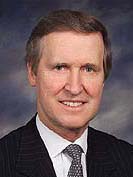
The Pacific Rim countries have now developed into a bloc of wealth and power that could very well represent the final destruction of this once great Christian Republic. To secure this "Mafia-type'' monopoly, President Clinton visited Thailand during his post-election tour of the Pacific Rim countries. He used this visit to specifically sign a treaty that regularizes taxation on businesses operating in both the U.S. and Thailand. Along with him at that signing was ex-Senator William Cohen of Maine. Mr. Cohen is "incidentally'' designated the Secretary of Defense in President Clinton's new cabinet. Further, Mr. Cohen has direct relationships with the Chinese National Association for Industry and Commerce, the Asia Pacific Policy Center and the U.S.-Thailand Business Council.
Mr. Cowen's primary mission for the November visit, was to attend the "Third Pacific Dialogue.'' The stated purpose of these "dialogue'' meetings is to bring together Asian and United States Business officials to further expand the East-West business opportunities. It becomes obvious that it is meetings such as this at which the need for treaties is created. Thus treaties are directly associated with cold business relations. The end product is that they have very little, if anything, to do with the best interests of the citizens of our sovereign nation.
It is also obvious that the creation of a treaty can be used for nothing more than the means to allow the federal government to force federally mandated laws on the state and local population for the sole purpose of creating money making opportunities for a select few (monopoly capitalists-monopoly communists).
The summation of this thought process will allow for a president to utilize the contents of a treaty to formulate presidential directives and presidential orders. There is no way to countermand presidential orders without removing the president from office and replacing him with a president who will issue a new order. This is the type of government now commonplace in this mad drive for a One World Order.
Just such an incident happened in September, 1996 when President Clinton, with the environment incensed vice-President Gore attending, issued the Presidential Order creating the one and one-half million acre Grand Staircase Escalante National Monument in Utah. Rather than facing the people of Utah, the president made the declaration on the rim of the Grand Canyon in Arizona!
Relating the need for the National Monument to the environmental treaties to save our heritage for the children, the President lumped together some truly spectacular scenery with a huge block of land that is nothing more than western desert, sage brush and all. However, conveniently located under all of this sage brush is perhaps the world's foremost block of "EPA Super Compliance Coal.'' It is estimated that over a trillion dollars worth of this super coal is available, all with deep mining techniques which would not disturb the surface in any manner whatsoever. Detailed impact statements have already been completed and work was to begin shortly to start removing this compliance coal for power plant use. The proceeds would have immeasurably helped the school children of Utah as well as other states.
Who are the participants in this seemingly benign measure to "protect the heritage of our children?'' It seems that the Lippo Group of Indonesia is deeply involved. We have heard and read much in recent weeks about the campaign finances scandals within the Democratic Party. That apparently is only the "tip of the iceberg!''
Lippo Bank and its president Mr. Riady, have been deeply involved in the political life and potentials of President Clinton since he was a budding politician in Arkansas. The Lippo Bank is the primary mover of a huge energy consortium in the Pacific Rim countries with direct ties to China. A Mr. John Huang was a Chinese nationalist who obtained an expedited American naturalization and security clearance in order that he could be employed in the Commerce Dept. along with Ron Brown. Work has been progressing rapidly toward locking up control of energy, not only in the Pacific nations but the Western World as well. It now has been stated that Mr. Huang has been conducting foreign interests while employed at taxpayer expenses in the administration.
Further, it is also now revealed that Lippo Bank was bought up by an organization called China Resources Incorporated. Evidence is now being presented that China Resources Inc. is a part of Red China's intelligence resources. Researchers are now thinking that Mr. John Huang, who has been employed by the U.S. Government, could very well have been a spy!
It would appear that the long term plans are to tie up the Utah coal reserves to prevent an American Company operating the mine and selling the coal to American power plants. This, in turn, would require American power plants to buy the coal from China and Indonesia. Then, in time to come, when it would be to the best commercial interests to open up the Utah mines, Lippo (China Resources Inc.) would have controlling interests.
All of this information is readily available if you are interested. There is a TV documentary type program found on satellite called The American Investigator. They recently aired a program on this subject and it was well documented. You may obtain a copy of that program by simply telephoning 1-800-638-0660. The cost of the video is $19.95 postpaid. It would be an excellent teaching tool for friends and relatives.
Just how far will commercial interests go in defiance to our national security? Our government is reputed to have intelligence services equaled by only Israel's Mossad. We must assume that the government affairs of other nations which could potentially be classified as antagonistic to our national interests would be well observed and reported. Any American loving his country would naturally believe that our national interests would come first.
Recently, the following Associated Press article released a sinister turn of events for our once Christian Republic. Following are excerpts from that article:
"Russia and China vowed to forge closer military and economic ties to counter the influence of the United States in the post-Cold War world. In a joint statement at the end of Chinese Premier Li Peng's three-day visit to Moscow, the two Eurasian giants proclaimed a new era in their relations.
..."The Soviet collapse left the world with one superpower, the United States, and Russia's post-Cold War foreign policy has been aimed at diluting U.S. domination of world affairs.
"...Russia and China are determined to create an `equal partnership...aimed at strategic interaction in the 21st century' and `building a multi-polar world,' the statement said.
"...Moscow also is seeking new customers for its arms and technical expertise, and China, with its booming economy and 2700-mile border with Russia, is a logical market.... One major project, approved in a memorandum signed Friday by Li and Chernomydrin, is a nuclear power plant in the eastern Chinese province of Jiangsu to be partly funded by a $2.5 billion loan from Russia, officials in Moscow said...The two nations also are trying to firm up more Russian arms sales to Beijing, contracts for a gas centrifuge plant in China and a gas pipeline from Siberia to China, and Russia's participation in the massive Three Gorges hydroelectric project.''
We see, once again, that China is the recipient of massive support to further increase their energy consortium efforts. Here we have Russia and China entering into memorandums of understanding with each other while at the same time the United States is vying for China's "pleasures.''
In summary, treaties can be a Godly as well as a "law of nations'' relationship. When our government treats them in the manner that they deserve, we can live in peace. When treaties are used for ulterior purposes including personal greed, we suffer as a people.
The Supreme court has ruled repeatedly, as Mr. Becraft has shown, that a treaty, needs to be ratified by the Senate before it is in effect. The Constitution doesn't say that just because the president signs a treaty that the Senate must obey his wish. Further, an additional check is made when the Congress needs first to pass implementing laws before they can become laws affecting the states. The word used by the Supreme Court is "empowered.'' That means "authorized'' or "allowed,'' not mandated. If our Congressmen find a treaty not to be in the best interests of the states, it then must not be passed into law. We must hold Congress responsible for this mess.