|
|
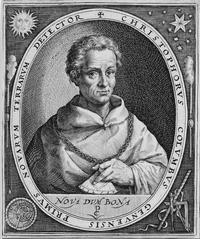
October 12th of each year is a national holiday commemorating the discovery of the Americas by Christopher Columbus. This year will be the 500th year since he landed in San Salvador and there are plans for an extraordinary celebration by the government and many civic organizations.
There is a need for all peoples, from all countries, to develop and perpetuate national pride in their accomplishments and in their race. Remember, the word nationality comes from the word national, or nation, and it represents race or ethnicity. The relationship between nationality and religion, or the manner of belief in God, is manifest and indisputable. As we unravel some of the history of the North American Continent we will find an exciting story that appears not to be politically acceptable to the establishment. Is the currently acceptable position favorable to Christianity or to another belief?
Was Columbus really the person who "discovered'' America? We all should know by now that he really wasn't the first European to come to these shores. Why then do we, as a nation, persist in giving him the credit for the discovery, even to the extent of totally ignoring the true history of the continent? The answer is political and religious (which go together) and our lessons in history have proven this.
Most of us have read (from reputable history books) of the adventures of Lief Eriksson and his party in the founding of Vinland circa A.D. 800-1400 in the area of the St. Laurence River in Northeastern United States and Canada. Although they predated the Columbus voyage by many centuries, were the expeditions of Lief Eriksson the first discovery of what is now known as the United States?
As we shall prove in this lesson, there were Christians living in this land over 1000 years before Columbus arrived in the Carribean. The official historians of this country have known this for many, many years. Yet, none of this is discussed as a national heritage. Why is this?
In this lesson we will present some of the history of early Europeans (and others) dating to the time long before the birth of Christ. We will then show the presence of Christians living here and their purpose for being here. Then, in the next lesson, we will show who Christopher Columbus was, who he represented and what his mission was. We will present the source documents for your own study. These two lessons should be very revealing and as we shall see once again, history, as we have been taught it all of our lives, has been very misleading and for a singular purpose.
Those of us who are interested in finding petroglyphs, or ancient symbols and pictures engraved on stones, have wondered about the meaning of them. All we could do was wonder and speculate until the science of deciphering ancient and unknown languages was developed. The science is called Epigraphics and it has been developed into a rather sophisticated science. Symbols, for example, mean something, but what?
Epigraphics. Until a few years ago geologists told us that the numerous short and repetitive lines enscribed on rocks found in the Northeastern United States and Canada were simply scratches made from the movement of ice and rocks during the recent ice-age. Because of Epigraphics, we now know that it was a language and it has been deciphered.
The Celts. This language is that of the Celts from Ireland, Scotland, England, France and the Rhineland country of Germany. The language dates from long before Christ and was in use in Ireland and England at the time of Celtic Druids. It is called Ogam script and has been found all over America, from the West Indies to Newfoundland and west into Oregon and British Columbia.
We know that Julius Caesar described the vessels that the Celts had built and used. In Book III of his De Bello Gallico he described these vessels against which his small, puny (by comparison), ships of the Roman fleet fought. He described them as being capable of sailing "upon the vast open sea.''
This is exactly what they did. It appears that there were many different expeditions and migrations by the Celts during the period of many centuries before Christ until circa 400-800 A.D. They came, not only just once to colonize, but they came and returned to Europe on a repetitive basis.
The Vikings. The Vikings were here in America when King Woden-lithi sailed the Atlantic seventeen centuries before Christ and entered the St. Lawrence River. He established a trading post at a site near where Toronto now stands. It became a religious and commercial center that is now known as Petroglyph Park at Peterborough, Canada. King Woden-lithi's home was in Norway.
He remained in Canada for five months, from April to September and traded his woven fabrics for copper ingots obtained from the European settlers. He called these people Wal, which is a word cognate with Wales and Welsh. He gave these Celts his religious beliefs, the ability to measure woven cloth and an astronomical observatory for measuring the Nordic calendar and for determining the dates of their pagan Yule and Ishtar festivals. Remember, this was seventeen centuries before Christ!
Ogam Script. The Celts were already here when King Woden-lithi arrived. What was their written language like? We have already shown that they wrote with the Ogam script which can be described simply as an alphabet, comprising fifteen consonants and five vowels, together with a few other signs representing double letters such as diphthongs. The letters are made by inscribing single parallel strokes placed in sets of one to five, in position above, across, or below a guide line.
The languages. But what words were made from this Ogam alphabet? Here again the science of Epigraphics gives us the answer. We know that there is no language of any of the American Indians that is made up of the Greek language. And yet the ancient Celts in the area of the St. Lawrence River spoke a language that was directly derived from the Greek! As we shall see, the different Celts in America spoke yet other languages!
The type of Greek that was spoken by the Celts of the area is known as Ptolemaic which means that it is a dialect of Greek that was spoken in Egypt, Palestine and the other countries in the area that Alexander conquered. Alexander forced upon the area his idea of one-world government, one-world people, one-world religion and one-world language. It was this Ptolemaic dialect that Alexander forced upon the citizens of the area. The dialect was composed of Greek, Egyptian and Aramaic. This is why Jesus spoke Aramaic and Greek, instead of Hebrew. We will study the effect that Alexander had on Israel and Christianity in a future lesson.
The obvious question from the previous paragraph is, who were the Celts? Did the Celts from Iberia (the Spanish peninsula) and the Rhineland go to Egypt and Palestine and learn the Greek spoken language at the time of Alexander or did the Israelites (not Jews) learn the Greek and Aramaic when they were in Palestine and then go to the new world to escape the dictatorship of Alexander? Remember, Israel lost the knowledge of ancient Hebrew (not modern Yiddish) before and during the time of Alexander.
The language of the Celts who were already here in the St. Lawrence River Valley when King Woden-lithe arrived has since been lost. Why has the language disappeared? This is probably at least partly because through the subsequent years they intermixed with other peoples and in the process the language was lost. It doesn't take much to lose a language. Notice the difference between American English and the English language spoken in England. But that doesn't account for the fact that a race of people totally vanished from the continent.
Some of the Ogam script is with the Gaelic influence. The Gaelic language came from the highlands of Scotland. In the New England area, artifacts such as grave headstones have been found, all with Ogam script in Gaelic script. (To this date no one has found the remains of the bodies because of the acid soil which destroys all remains within 100 years. Additionally, our early American settlers removed the headstones from the burial sites and placed them in hedgerows along the sides of the fields and so the headstones are not now located near the actual graves).
The Celts with the Gaelic dialect came from the highlands of Scotland. According to the Scottish Declaration of Independence written by Robert Bruce and his noblemen, the Scotland people came from ancient Israel through the Rhineland area of France and Germany and then through Iberia or Spain.
The mariners from Tarshish. Tarshish was thy merchant by reason of the multitude of all kind of riches; with silver, iron, tin, and lead, they traded in thy fairs (Ezek. 27:12). The Celts were well established in foreign trade. In 1780, Ezra Stiles, who later became the president of Yale College, found and recorded a Tartessian inscription on a rock along the seashore near Mount Hope Bay, Rhode Island. The deeply cut inscription clearly shows the outline of a typical high-sterned ship from Tarshish. Under the outline of the ship are the words in Tartessian (Tarshish) Punic, "Mariners of Tarshish this rock proclaims.'' Near Union, New Hampshire, another Tartessian inscription was found with a similar Tarshish ship hull and the words, "Voyagers from Tarshish this stone proclaims.''
On Mohegan Island, off the coast of Maine, is, in Ogam script in Gaelic dialect, an inscription showing that the Celts traded with the traders from Tarshish. It is obvious that the mariners from Tarshish were not residents of the area as were the Celts. They were trading with the Celts for their furs and raw materials from the mining done by the Celts. Thus, there was a lively trade being conducted between the Japhetic sons of Tarshish (Genesis 10:4) and the Celtic sons of Shem.
Some of the trading was done with goods in exchange for the furs and metals of the Celts. But there was also an exchange for coins. It seems that modern historians won't believe the facts of history such as the Ogam inscriptions. They only like to see the money! Well, there is that, too!
Coins. From about the fourth century B.C. the ancient mariner traders brought coins in addition to goods. In the year 1787, Pastor Thaddeus Mason Harris came upon a group of men working on a road known as the Cambridge-Malden road (now Route 16) in Massachusetts. The workers had uncovered a flat stone underneath the surface. Under the stone was a cache of ancient coins, nearly two quarts of them. The coins were square pieces made of a copper-silver alloy. Each coin was stamped on both sides with an unknown script.
Pastor Harris recorded the incident in a letter to John Quincy Adams. The inscriptions were taken to the Harvard Library for translation but with no success. The letter was then buried in the archives for nearly two hundred years until James Whittall, of the Early Sites Research Society, re-discovered the letter with the inscriptions and researched them with the American Numismatic Society and with Epigraphic scientists. The inscriptions proved to be that of Kufic origin which is a form of Arabic. Undoubtedly, one of the trading mariners brought the coins to America to purchase the Celtic goods which were for sale.
After the newly designed steel plow was invented by Charles Newbold in 1797, the earth could be turned over to a much greater depth. The furrow that the new plow made opened up the soil and there, by the thousands, were found Roman coins!
In days of early America, the extensive study of Latin and Roman history was required for a college degree. Thus, the people of America readily knew that Europeans came to America and lived in America much earlier than Christopher Columbus. But later, from American history books, our school children were taught the Columbus mystique and they were taught that the world was considered flat by all educated people until Columbus discovered America! As we shall see, nothing ever happens in politics (and the school curriculum) unless it is intended that way. All of those Roman coins that were discovered were ignored and it has remained that way until very recently. As we continue our studies, we will realize why the truth was buried.
In 1961, Frederick J. Pohl raised the nagging question of the Roman coins in his book Atlantic Crossings Before Columbus. He describes notable finds of Roman coins in the United States. Other scientists have carried on the task of proving the European travels to this continent long before Columbus. One of the notable men in this field is Professor Cyclone Covey of Wake Forest University. Much will be discussed about his investigations later in this lesson.
Roman coins are not the only money found in America. Carthaginian, Celto-Iberian, Greek, Libyan and Norse coins have been found in locations all over the United States. Near Castle Gardens, Wyoming a petroglyph was found, written in Celto-Gaelic, describing the location of what would be the description of a bank. Yes, the petroglyph says that this was the first money-changing location to reach the area and that the bank operated with no usury! Undoubtedly, this was a location for exchanging the value of one coin for another for the purpose of trading and traveling. The petroglyph written in Celto-Gaelic undoubtedly means that the Celts were located in Wyoming and the fact that they operated with no usury is significant. We will shortly discuss the type of law the Celts exercised.
From 400 B.C. to 1100 A.D., the Western world realized six maritime powers. They all came out of the Mediterranean area except for the last one. They are, in order of their appearance, (1) the Carthaginians of Tunisia; (2) the Greeks and Libyans of North Africa; (3) the Romans; (4) the Byzantine Greeks who succeeded Rome; (5) the Islamic powers of North Africa and Asia; and (6) the Norse sea-rovers.
Although the Celts were never realized as a maritime power, since they were a people scattered over many countries, their ocean-going ships were among the best. These ships were huge in comparison to the Roman ships. They were two thousand tons in capacity as compared to about four hundren tons of the average Roman ship. The ships that the uncle of Jesus, Joseph of Aramathea, used to haul lead and tin from the Glastonbury area of England for sale to the Romans were Celtic in design and operation. Again, Julius Caesar spoke very highly of the sea- going prowess of the Celts and their ships.
Throughout this period, each of these maritime powers sent ships all over the high seas and to America. But it was the Libyans who transcended all of the others in the span of their voyages. A Libyan, named Eratosthenes of Cyrene, accurately calculated the earth's circumference. He reasoned that the earth's oceans had to be continuous and consequently a ship could sail around the world in either direction and return to the starting point. The date was approximately 239 B.C.!
Eratosthenes developed the system of the meridian circles of the map of the globe. The meridian circles are simply the points on the globe where the sun is directly overhead at noon at the local time. He set these meridian circles in a grid in such a way that a mariner could accurately locate his position. He drew the primary meridian circle to pass through Alexandria.
The Libyans then set sail in their ocean-going vessels to prove that Eratosthenes was right. Their ships were equipped with magnetic compasses. Their compass consisted of a ceramic bowl with the compass points engraved around the edge. A lodestone (a strongly magnetic variety of the mineral magnetite) was floated on the water in the bowl. Sometimes, a magnetized iron strip was suspended in the bowl. They also had a device for navigation that was the forerunner of the modern sextant.
The Libyans traveled eastward, through the Suez Canal that King Darius had built, then sailed down the Red Sea, and then around the tip of India, through the Indonesian straits and then into the Pacific Ocean. They arrived on the West Coast of America, disembarked and traveled inland to Nevada.
These ancient Libyans settled in the arid Nevada country because it was very similar to their own home country. In various locations in Nevada are petroglyphs, written in Aramic-Lybian and Celto-Gaelic which reflect their mariner skills. There is a map of North America, showing the outline of both coasts from the Hudson Bay country of Canada to Panama in the South. It was obviously taken from one of their meridian circle navigation charts that Eratosthenes developed. In addition, examples of their mathematics is displayed along with oceanography. Their alphabet was written in stone for us to see. Astronomy as a science is displayed. Remember, before the fall of the Roman Empire, the center of Western civilization rested along the shores of the Mediterranean Sea.
The modern day epigraphic scientists are puzzled as to what happened to all of these people, from the Celts, to the Carthaginians, to the Libyans and all the other original settlers who have come to this land. Perhaps by the end of this lesson, we will have a better understanding of their demise. Certainly educated people in the sciences and mathematics lived here many years ago, that is now obvious. But when the American colonists arrived, the natives had no written language nor any knowledge of higher education.
For example, the Paiute and Shoshone tribesmen of Nevada were asked where all of the petroglyphs we now know to have been scribed by the Libyans came from, they could tell the archeologists and epigraphists nothing except that neither they nor their forebears had cut them.
However, some of the methods and style of living that were taught by these ancient settlers have come on down through the centuries by the indigenous peoples who were here and then remained after the mysterious disappearance. For example, in the modern, Libyan North African region there are two Distinct ecological groups.
(1) The first is the modern Berber who is of lighter skin with obvious European features with many having blond hair and blue eyes. He prefers to live in the mountainous regions where there is more water and better soil. He is an agriculturist and he builds his home pueblo style out of sun-dried mud which he calls in Arabic at-tobi which in America is called adobe. Their buildings are multi-level with the floors and ceilings strengthened with wooden beams which project beyond the outer walls. His dress code calls for the women not to wear the face veil but to tatoo their chins. The men have the custom to cover their heads and faces with a scarf-like cloth, showing only their eyes to strangers. Even today, these modern Berbers still speak the Berber language which came to them from their Celto-Iberian background.
(2) The second ecological group is the Arabs. They are nomadic, moving their herds from place to place in the lowlands. They live in tents. The women cover their heads with veils and are not tatooed. The men do not veil the face. Their language is Arabic.
In the Peabody Museum of Harvard University are ancient bowls made by these Libyan mariners who built their temporary colonies in the Southwestern United States. The bowls very clearly show a man and woman painted on the sides of each. The women have no veil but have their chins tatooed. The men have the Berber type scarf covering their faces with only the eyes showing! Beyond a doubt, these people were a part of the Libyan expeditions into the Western United States. They, too, suddenly dissappeared in the 10th to 12th century A.D., after having been here from about 500 B.C. All of these people abandoned their towns and simply vanished.
The ancient Berbers were of Celto- Iberian origin. They spoke a Gaelic Celto-Iberian language. When we again return to the Scottish Declaration of Independence and read that they travelled through Iberia (the Spanish Peninusla) on their way to Scotland and Ireland, it would account for the Celto-Iberian- Gaelic dialect. It is in this language that the great majority of the petroglyphs are written. It is obvious that the Libyan Berbers associated with the Celts of the Eastern and Northern United States during the apex of their civilization here. It is apparent that they had a flourishing trade with their home countries of Europe. Not only did they travel to and from Europe on occasion in their own ships, they conducted commerce with the traders from Tarshish and Carthage. Just as the Celts in the Glastonbury and Avalon areas of England mined for tin and lead and shipped the finished metal to Rome in Joseph of Aremathea's ships, the same Celts conducted mining operations in America and either sold or traded their metal with Europe. But it all vanished around the end of the first millenium A.D.
Christianity and the American Celts. When the first Celts arrived in America, they were as pagan as their brothers in Europe. Many of the earlier inscriptions in America depicted Baal worship and classical Phallic worship. Then, all of a sudden, there came the appearance of Christian inscriptions. In fact, whenever it was possible, the later Christian inscriptions were inscribed over the top of the earlier pagan writing. This was obvious to the epigraphic scientists because the later inscriptions were cut deeper and partially obliterated the earlier work.
In Cripple Creek, Colorado there is a memorial in Greek that states, "Herein is the last resting place of Palladis (a priest), the servant of God.'' At Oak Island, Nova Scotia is found an inscription in Libyan dialect of the North African Coptic Church, which states, "To escape contagion of plague and winter hardships, he is to pray for an end or mitigation, the arif: The people will perish in misery if they forget the Lord, alas. (The arif was a precentor in charge of a small congregation lacking an ordained priest of the North African Coptic Church.)
Wherever Christianity has gone, the Laws of God have been adapted into the legal system of the community. The Christian Celts of Iberia, Ireland, Scotland as well as the Christian Celts of America had a legal system that reflected the teachings of the Christian Bible.
The system was called the Tanistry which means the administration of law by deputies of the king. The system as it is preserved from ancient times is rather lengthy so here are just a few examples to show the influence of the Christian Bible:
(1.) "In the obscurity of the mists of olden time a desire would arise to replace armed combat by arbitration (I Kings 3:16-28), (I Cor. 6:1-8).
(2.) And it would seem a desirable thing that land boundaries should be fixed without recourse to moats.(Deut.19:14; 27:17; Job 24:2; Prov.22:28; 23:10; Jos. 5:10.)''
(3.) "Henceforth cases involving wrongdoing are to be made over to the wisest men.(Ex. 18:21-22; 22:9; Lev.19:15; Deut. 1:13-15).
(4.) Any case is to be brought to judgment without delay.
(5.) Henceforth in any case involving false utterances let amends be paid in compensation for the harm. (Deut. 19:16-20; Prov. 6:16-19; Lev. 19:16.)''
(6.) "Henceforth if a complaintant be merciful, let the judges also be merciful. (II Sam. 22:26; Psa. 18:25).
(7.) If a malicious man utter lying words that another declares to be slanderous, to the measure of his tongue-loose recklessness shall he transport heavy burdens for the other man (Lev. 6:2-6).
(8.) The common people may eat corn, together with game bird but they may not hunt bears. They may kill stags, goats and red deer (Lev. 1-30).''
There is much more to the Tanistry but this gives the reader the knowledge that the early Celts became Christian and this was imparted to those Celts living in the United States long before Columbus "discovered'' America.
The Norsemen. The Columbus mystique has been so impressed on the American people that we are blinded to facts. Such again is the case of the colonists from Norway. When Thormod Torfason wrote his authenticated works titled Historia Vinlandae Antiquae in 1705, very few historians and other scholars knew anything of the many trips to America by the Norse mariners and colonists. For over two more centuries, nearly everyone continued to disbelieve Torfason's studies. The American's minds were made up, don't confuse us with facts! We will understand why we have been misled by the conclusion of the next lesson in history.
On May 24, 1934, a mining prospector named James Edward Dodd was blasting in the Great Lakes region of Canada and his dynamite uncovered a sword and a shield. These artifacts were taken to the Royal Ontario Museum and they were accurately dated to the first quarter of the eleventh century, about 1025 A.D. It was at this time that Leif Eriksson began his first ventures to the land that he called Vinland. The name itself was given to the St. Lawrence River area because of the abundance of wild grapes that the Norsemen found to make a very good grade of wine.
Because of the find of the sword and shield, along with much other evidence, we Americans began to believe that the Norsemen did, indeed, predate Columbus' discovery. In the 1930's, we began to learn about the tremendous amount of European travel and commerce predating Eriksson by many centuries. Then in 1940, we were reconvinced that Eriksson didn't exist and that there was absolutely nobody who preceeded Columbus. Admiral Samuel Eliot Morison was an author who appeared to be "puffed'' by the establishment. His style of writing was light and airy and he was very capable of mixing legends in with archaeological and historical facts in such a way that it became easy to question the technical analysis. In 1940, from his Harvard position, he was adamant in his position that Columbus was the first and in 1942 he wrote Admiral of the Ocean Sea: A Life of Christopher Columbus to prove his point.
By 1961 the Royal Ontario Museum was obliged to re-evaluate their analysis of the sword and shield by stating that it "was not possible to authenticate the story of the alleged discovery.''
In Admiral Morison's book The European Discovery of America, he refutes the Vinland story by stating that nearly all of the seacoast towns from Newfoundland to the Virginia Capes boast in their histories that Lief Eriksson was there. But he says that there have been no artifacts to prove his presence. He states that the Newport stone tower which is cherished as the first Christian Church in America is a fake and that it was built around 1675 by a colonial governor of Rhode Island.
Yet, in 1946 an authenticated inscription was found on one of the rocks of the tower. The inscription is in Nordic Runes and simply declares the tower to be the "cathedral church'' and the "Bishop's Seat.'' The Newport Tower is a part of the church that the Norsemen built in the early 1300's.
|
|
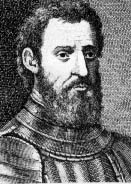
To further authenticate this, the Italian explorer Giovanni de Verrazano in 1524 sailed up the East coast of the United States from Florida to Labrador. He rediscovered Long Island Sound and the Hudson River. He drew a map, which is officially shown in the Archives, of the Narragansett coast and in his writings he described the stone-built "Norman Villa.'' He went ashore and found friendly Indians who knew nothing of the building of the villa. Verrazano recognized it to be Norse because of the style of architecture and other evidence.
An English document (of the period of the Pilgrims) proposed a settlement in Rhode Island. The document gave the location of the Norman Tower as the place where the settlement should be made. In Rhode Island today, the local name for the tower is often given as "Governor Arnold's Mill,'' because the first governor made use of the tower as a flour mill. Here is an example of how a historian can take partial facts, along with legend, and make it fit the "politically correct thing to say.''
There is evidence now being discovered that shows the Norsemen to have sailed South, along the Eastern seashore, into the Gulf of Mexico and then up the Mississippi River. Not only have Viking Battle Axes been found but more inscriptions to prove their presence. The Heavener runestone inscription in the Oklahoma State Park on Poteau Mountain has been definitely judged to be Nordic script of the Viking Age of not later than 1350 A.D. Viking inscriptions have also been found in Colorado. No longer can we deny the presence of the Norsemen in America several hundred years before Columbus.
We have left for last what is perhaps the most striking evidence of pre-Columbus Europeans in America. In the Southwestern part of the United States the climate is generally arid or semi-arid and the soil is more alkaline. As a result of these conditions artifacts, including human remains, are left intact for a very long time.
There is mounting evidence that Europeans, in significant numbers, colonized a portion of the Southwestern United States during the period from approximately 700 A.D. until about 1300 A.D. It is very significant that all of the colonies in North America, including this one under discussion, appeared to simply vanish within an approximate 100 year time frame. We may never know the exact reasons and there could have been several. We know that the Europeans transmitted diseases that were specific to Europe to the indiginous natives who were vulnerable to them. Conversely, the natives gave the Europeans specific diseases to which they were vulnerable, such as some of the social deseases. Or, there could have very easily been a universal uprising and this is even probable. Whatever the reasons were, we must believe that the ventures did not please God. There had to be things that were done that were seriously breaking some of His Laws. An analysis of this will be presented in these two lessons.
About 700 A.D. there appeared in the area of West Texas, New Mexico, Colorado, Arizona and Nevada, a literal empire apparently made up of a city- state system. The empire was Christian and they had succeeding kings. The people came from the British Isles, Gaul (France), Germany, Rome and apparently North Africa. Undoubtedly, the North Africans were the Berbers who had already arrived from Libya and had previously taught the natives to build the pueblo style structures and to irrigate for farming.
Some of the ancient ruins that were very skillfully built of stone masonry that are dotted over the Southwest are probably associated with the empire. Some of these ancient ruins have been rebuilt with later construction over the top of the original. The modern Amerindian knows nothing about the builders of these ancient cities. However, they have given a name to these earlier inhabitants. They call them the Hohokam, which means "Those who have gone'' or "The old ones.'' After the Spaniards occupied Mexico in the early 1500's, they headed north to investigate the persistent stories of the fabulously wealthy "Seven Cities of Cibola.'' Of course they never found them because the empire had simply vanished a couple of hundred years earlier. Even in 1300 A.D. the empire had already waned in its importance as a kingdom so there wasn't much left.
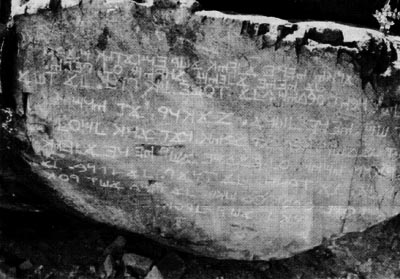
In New Mexico, south of Albuquerque and west of Los Lunas about 14 miles, is a huge Basalt (volcanic) boulder. The rock is nestled in a small draw on the side of a group of hills which overlooks the stream called Rio Puerco. The front side, protruding from the soil, is very flat and provides a perfect place for an inscription.
|
|
On this boulder, inscribed in old Hebrew with a Greek influence, is the Decalog or The Ten Commandments! Some years ago, we here at Christian Crusade for Truth became very interested in this inscription after we had read about it in an article in the Albuquerque Journal. As early as 1850, when New Mexico became a territory, people knew of the inscription but it was not until a century later when Professor Robert Pfeiffer of Harvard University, an authority on the Old Testament, determined it to be The Ten Commandments. The inscription was then re-authenticated as being The Ten Commandments by Dr. Barry Fell, the country's foremost epigraphic scientist.
During the 1983 and 1984 summer camps conducted by Pastor Sheldon Emry of America's Promise, we conducted tours of the site and hundreds of our people were able to visit and ponder this amazing inscription.
The most revealing discoveries of this ancient kingdom came from the Tucson, Arizona area. Along the Santa Cruz River, in the vicinity of Tucson, beneath six or more feet of undisturbed caliche soil, were found many artifacts that unquestionably prove that European people lived in the area. Caliche soil is made up of crusted calcium carbonate mixed with ordinary dirt. Through many years, water mixes with the combination and turns it into a very hard, concrete like, soil. After it is once formed, if it is then removed, the soil never returns to the original configuration. Thus, when the artifacts were found, it is certain that they are of ancient origin and not a recent fraud.
The artifacts included lead swords, spears, a patriarchal monstrance or shrine used in the religious ceremonies, and eight heavy crosses. All of the artifacts were made of molded lead which was mined in the area. This is known because some of the molds were also found. Each of the crosses was actually two thin lead crosses which were riveted together with lead rivets. When the two halves were separated, it was found that the inner sides were protected with wax in order to preserve the inscriptions which were on the inside parts. It became obvious that the crosses were made for the purpose of a permanent recording of events that were taking place at the time.. The swords were not to be used for combat. They were made of lead and also contained inscriptions. They were for ceremonies of some sort. The inscriptions contained words in Hebrew, Latin and Greek. Here are some of the translations:
On one of the crosses, at the top are the words "In Memoriam.'' On the cross arm at the left is a profile of a head with the words "Britain, Albion, Jacob.'' In the center is another head profile with the words "Romans, Actium, Theodore.'' On the right is another head profile with the words "Gaul, Seine, Israel.''
On the vertical beam of the lead cross is this inscription. "Consuls of great cities together with seven hundred soldiers A.D. 800, Jan. 1.''
"We are borne over the sea to Calalus, an unknown land where Toltezus Silvanus ruled far and wide over a people. Theodore transferred his troops to the foot of the city Rhoda and more than seven hundred were captured. No gold is taken away. Theodore, a man of great courage, rules for fourteen years. Jacob rules for six. With the help of God, nothing has to be feared. In the name of Israel, OL.''
As we will see, the inscriptions on these artifacts is a sort of history of one of the city-states of the European migration to this country. The first inscription reveals that Theodore was the ruling king over the city-state of Rhoda. The Toltecs (which history shows existed in Mexico in this time frame) were under Chief Toltezus Silvanus who ruled over a very large area and people. Theodore was a Roman and he moved his troops to the foot or outskirts of the city Rhoda for defense against the Toltecs. Apparently the troops could not hold against the Toltecs and 700 troops were captured but the Toltecs did not take any gold. Theodore must have been killed in that battle.
The second cross has the following inscription which, of course, has been translated from the Latin and Greek. "Jacob renews the city. With God's help Jacob rules with mighty hand in the manner of his ancestors. Sing to the Lord. May his fame live forever. OL.''
Jacob was the native of Britain and he succeeded Theodore for six years while counterattacking the enemy. He personally fought at the front lines and it appears that he died in battle.
The third cross yielded this inscription. "From the egg (the beginning) A.D. 700 to A.D. 900. Nothing but the cross. While the war was raging, Israel died. Pray for the soul of Israel. May the earth lie light on thee. He adds glory to ancestral glory. Israel, defender of the faith. Israel reigns sixty-seven years.''
Israel I was born on the Seine River in France but he must have been just a boy when he assumed the throne in 785. These dates are known because of other inscriptions but there are too many of them to include here. The year 790 under Israel I's reign was important because of his decisive victory over the Toltecs. He subjugated them to be under his rule. On Jan. 1, 800 he presided over a council of allied city-states. Because of the present peace, he turned his attention to the priesthood.
The next inscription. "Israel II rules for six. Israel III was twenty-six years old when he began to rule. Internecine war. To conquer or die. He flourishes in ancestral honor day by day.''
The next inscription. "A.D. 880. Israel III, for liberating the Toltezus, was banished. He was first to break the custom. The earth shook. Fear overwhelmed the hearts of men in the third year after he had fled. They betook themselves into the city and kept themselves within their walls. A dead man thou shall neither bury nor burn in the city. Before the city a plain was extending. Hills rung the city. It is a hundred years since Jacob was king. Jacob stationed himself in the front line. He anticipated everything. He fought much himself. Often smote the enemy. Israel turned his attention to the appointment of priests. We have life, a people widely ruling. OL.''
The next inscription. "A.D. 895. An unknown land. Would that I might accomplish my task to serve the king. It is uncertain how long life will continue. There are many things which can be said while the war rages. Three thousand were killed. The leader with his principal men are captured. Nothing but peace was sought. God ordains all things. OL.''
The author of the book Calalus is a history professor at Wake Forest University. He mistakenly describes the people of Rhoda as Roman Jews. This is undoubtedly because of the names of the individuals. But again, Dr. Barry Fell, the nation's foremost expert epigraphist shows them to be Christians from England, France, Rome and North Africa. The crosses would have been unacceptable if they were Jews. The use of the chronological term A.D., which was started by Dionesius in 532 A.D., would certainly have been unacceptable to the Jews. To this day they term the present chronological time the "Christian Era'' instead of A.D.
The Toltecs went on to totally destroy these people. Why didn't these European Christians survive? Why did all of the other Europeans mysteriously vanish with the last of them having been gone since the 1300's?
It was for several reasons, all of which are distasteful to God for His Celto-Saxon people. The Apostle Paul summed it all up when he said "Wherefore come out from among them, and be ye separate, saith the Lord, and touch not the unclean thing; and I will receive you.'' Isaiah in 52:11 says the same thing.
For one thing, they had to interbreed themselves out of existence, at least in part. They also apparently came for the riches of gold and silver. In nearly all cases, there appears to be mining as a principle purpose for being here. They also apparently tried to subdue the native population. In other words, use them as slave or cheap labor.
If we will look back into history, all of the great civilizations of the Celto-Saxon fell when they brought in the cheap labor or slaves and then mixed with them. The process destroys both cultures. If we will but look at our own history we will see a lesson. That part of our culture that came from the Pilgrims and then moved westward as the needs required used their own labor. They had large families and the children worked in their enterprise, be it farming or a shop in town. They remained separated from other peoples and they were told in their churches that gold would be used for street paving in the future!
As long as our forefathers stayed separate, feared God, loved their neighbor as themselves and did not love mammon more than their gifts from God, they were a peculiar people to Him. Look around us in modern America and what we see speaks for itself. But it is not too late. It is not too late.
In the next issue, we will discuss the history of Columbus, the purpose of his voyage, what happened to him and what happened to all those who followed him into the Caribbean, Central America, South America and Mexico.
The source documents for this lesson are intermingled throughout the message. Therefore we will list the sources as a group. These sources then relate to other documents which would be valuable for research.
1. Barry Fell. Bronze Age America. Ruggles De Latour, New York.
2. Barry Fell. America B.C. Simon & Schuster, New York.
3. Barry Fell. Saga America. Times Books, New York.
4. Cyclone Covey. Calalus. Vantage Press, New York.
5. Samuel Morison. The European Discovery of America. Oxford University Press.
6. Samuel Morison. Admiral of the Ocean Sea. Little, Brown & Co. Boston.