"Thou shalt make no covenant with them, nor with their gods. They shall not dwell in thy land, lest they make thee sin against me: for if thou serve their gods, it will surely be a snare unto thee.'' (Ex 23:32-33)
"Be ye not unequally yoked together with unbelievers: for what fellowship hath righteousness with unrighteousness? and what communion hath light with darkness? And what concord hath Christ with Belial? or what part hath he that believeth with an infidel: Wherefore come out from among them, and be ye separate, saith the Lord, and touch not the unclean thing: and I will receive you." (II Cor 6:14,15,17)
"Think not that I am come to destroy the law, or the prophets: I am not come to destroy, but to fulfil. For verily I say unto you, Till heaven and earth pass, one jot or one tittle shall in no wise pass from the law, till all be fulfilled.'' (Mat 5:17-19)
Those three passages are just as valid today as the day they were given to the prophets and the day that Jesus spoke those words as recorded in the Book of Matthew. If we, as a nation, fail to heed the principles outlined in those three passages, we will lose what our forefathers gave us. We have failed them.
Contrary to the actions of our governments today, this nation was founded as a Christian nation and by Christians. The Constitution was framed by men who were Christian. The Constitution was ratified by the people (and their state governments) who were Christian.
There are many today who are organizing patriot groups, militias and other action groups in an attempt to regain a government who will abide by the Constitution and the Bill of Rights. Many, if not most, of these organizations allow people to join who come from civilizations from all over the world. They allow people to join who are not Christian. They believe that they can regain the Constitution without the teachings of Jesus Christ and the Bible. They appear to be honest when they say that the Constitution and Christianity are totally separate. They use such statements as, "The Founding Fathers were Diests, not Christian.''
Further, because of an extremely clever, and bordering on an unlawful, misinterpretation of what the First Amendment to our Constitution says, most Americans honestly believe that there is a "separation of Church and State'' clause in the Bill of Rights. It is because of that fact, not only our First Amendment Rights have been negated, but the entire civilization that our forefathers gave us has been lost.
This point is so important that we have decided to dedicate this entire issue to this most important question. In this issue we will be showing that the fathers of this country were Christian and they openly avowed that fact. We will be showing that, again, contrary to popular opinion, the First Amendment in no way separates Church and State. We will show what constitutes the customs, morays and morals of this nation and why that is so important. We will be showing how and when all of this was taken away from our people and by whom.
We will be showing why our form of government and its laws, our customs and morals, our quality of education, our work ethic, our creativity, and certainly our spirituality, depends upon how our people, government and citizens alike, understand the First Amendment to the Constitution. It is in the misunderstanding of this all important Amendment that we no longer have the liberties and freedom our forefathers enjoyed.
Most of our citizens in this country incorrectly, and perhaps inadvertantly, state that there must be a separation of Church and State. They are taught this by our government, our schools, and most of our churches. There is a specific reason why our churches teach this, too.
|
|
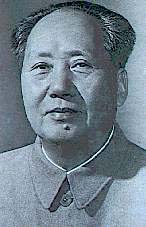
There has to be some form of government in all societies throughout history. In the most primitive of civilizations, the chieftain creates his own law to meet his needs. In a dictatorship, the dictator determines the law. Mao Tse Tung stated that law comes from the end of a barrel. Kings who believe they have the divine right make the laws. Democracies determine the law by the vote of its citizens. Republics make their laws by the citizens electing their representatives who are to use a set of standards, which are also approved by the citizens.
So all of these forms of government have laws. The United States is no exception. Contrary to modern terminology repeatedly reported by the media, the United States is not a Democracy. It was created as a Republic and it still is, at least in principle.
So what did our forfathers use as their standard to create our form of government? Were they actually Diests? Did they believe that destiny and fate determined their action? Or did they truly believe that God actually rules in the affairs of men and that God, through Jesus Christ, directed their cause and actions? What do actual historical documents state as compared to the writings of modern historians and social workers?
Some of the references found in this issue comes from the book Original Intent by David Barton (Wall Builder Press, PO Box 397, Aledo, TX 76008). Other sources will be indentified individually.
With respect to religion being used in the preparation of the Constitution, there are two places, which show that the Founders were cognizant of this issue and in both places modern America misunderstands them. The first in in Article VI, Section 3, "No religious test shall ever be required as a qualification to any office or public trust under the United States.'' The second place is in the First Amendment, "Congress shall make no law respecting an establishment of religion or prohibiting the free exercise thereof...'' Although both of those statements are somewhat vague, the citizens and governments of the United States clearly understood what the Founding Fathers meant and they acted accordingly.
The reason we clearly understood them is because of a simple maxim of law. Justice James Wilson, signer of both the Declaration of Independence and the Constitution, wrote, "The first and governing maxim in the interpretation of a statute is to discover the meaning of those who made it.'' (The Works of the Honourable James Wilson. Bird Wilson, Bronson and Chausey, 1804). Thomas Jefferson, while he was President wrote, "On every question of construction, carry ourselves back to the time when the Constitution was adopted, recollect the spirit manifested in the debates, and instead of trying what meaning may be squeezed out of the text, or invented against it, conform to the probable one in which it was passed.'' (Memoir, Correspondence, and Miscellanies, From the Papers of Thomas Jefferson. Boston:Gray and Bowen, 1830).
The Founders meaning of those statements in the Constitution is also a matter of historical fact, so we have no excuse of saying that we don't know what the Founders meant or that they were Dieists of simply believers of destiny and fate. George Mason, considered by many to be "The Father of the Bill of Rights'' wrote, "All men have an equal, natural and unalienable right to the free exercise of religion, according to the dictates of conscience; and that no particular sect or society of CHRISTIANS ought to be favored or established by law in preference to others.'' (The Life of George Mason, Kate Mason Rowland, G. P. Putnam, 1892).
That same sentiment was unaminous among the states as they discussed the ratification process. Governor Samuel Johnson commented during North Carolina's ratification actions, "I know but two or three States where there is the least chance of establishing any particular religion. The people of Massachusetts and Connecticut are mostly Presbyterians. In every other State, the people are divided into a great number os sects. In Rhode Island, the tenets of the Baptists, I believe, prevail. In New York, they are divided very much: the most numerous are the Episcopalians and the Baptists. In New Jersey, they are as much divided as we are. In Pennsylvania, if any sect prevails more than others, it is that of the Quakers. In Maryland, the Episcopalians are most numerous, though there are other sects. In Virginia, there are many sects; you all know what their religious sentiments are. So in all the Southern States they differ; as also in New Hampshire. I hope, therefore, that gentlemen will see there is no cause of fear that any one religion shall be exclusively established'' (The Debates in the Several State Conventions on the Adoption of the Federal Constitution., Jonathan Elliot, 1836, Washington D.C.).
They, however, were very concerned that some other religion than Christianity could possibly rule in the affairs of men in the United States. Supreme Court Justice James Iredell, nominated to the court by President Washington, said, "But it is objected that the people of America may perhaps choose representatives who have no religion at all, and that pagans and Mahometans may be admitted into office...But it is never to be supposed that the people of America will trust their dearest rights to persons who have no religion at all, or a religion materially different from their own.'' (Jonathan Eliot's Debates, Washington D.C. 1836).
Governor Samuel Johnson of North Carolina also discussed this matter which proves to be prophetic. "It is apprehended that Jews, Mahometans (Moslims), pagans, etc, may be elected to high offices under the government of the United States. Those who are Mahometans, or any others who are not professors of the CHRISTIAN religion, can never be elected to the office of President or other high office, but in one of two cases. First, if the people of America lay aside the Christian religion altogether, it may happen. Should this unfortunately take place, the people will choose such men as think as they do themselves. Another case is if any persons of such descriptions would, notwithstanding their religion, acquire the confidence and esteem of the people of America by their good conduct and practice of virtue, they may be chosen.'' (Eliot's Debates, Washington D.C. 1836).
These brave men who brought us a genuine Christian Republic, one hopefully without fear of repeating the mistakes of Europe with the Holy Roman Empire and England with its divine right of kings through the Church of England, have been used as the scapegoats to modify our civilization. They have been taken out of context, maligned, untruths said about them, and blatant omissions of their statements.
The now famous and "authoritarian'' historians Charles and Mary Beard wrote in their book Rise of American Civilization (McMillan Co. 1930), "national government was secular from top to bottom and the Founders reared a national government of a secular basis." (McMillan Co. 1930).
They also, in that same book wrote, "And the First Amendment, added by the radicals in 1791, declared that `Congress shall make no law respecting an establishment of religion, or prohibiting the free exercise thereof'' Shouldn't we be grateful to God that we had radicals in 1791?
W.E. Woodward wrote in his book George Washington: The Image and the Man (Boni and Liverlight, 1926), "The name Jesus Christ is not mentioned even once in the vast collection of Washington's published letters.'' That is a blatant untruth.
On June 12, 1779, in a speech to the Delaware Indian Chiefs, Washington wrote: "You do well to wish to learn our arts and ways of life, and above all, the religion of Jesus Christ. These will make you a greater and happier people than you are. Congress will do every thing they can to assist you in this wise intention'' (The Writing of Washington, John C. Fitzpatrick, U.S. Government Printing Office, 1932). Washington was undoubtedly referring to the book of Isaiah in that speech: "And many people shall go and say, Come ye, and let us go up to the mountain of the Lord, to the house of the God of Jacob; and he will teach us of his ways, and we will walk in his paths: for out of Zion shall go forth the law, and the word of the Lord from Jerusalem.'' (Isa 2:3)
George Washington's adopted daughter knew of those who were opposing the Christian faith when she declared: "I should have thought it the greatest heresy to doubt his (George Washington's) firm belief in Christianity. His life, his writing, prove that he was a Christian'' (The Writings of George Washington, Jared Sparks, Ferdinand Andrews, 1838).
John Adams, in a letter to Thomas Jefferson, June 28, 1813, wrote "The general principles on which the fathers achieved independence were...the general principles of Christianity...I will avow that I then believed, and now believe, that those general principles of Christianity are as eternal and immutable as the existence and attributes of God; and that those principles of liberty are as unalterable as human nature.''
Because of space, we cannot add the voluminous information available that proves the point that is being made, that is, the Constitution was conceived and written by men who were Christian. This is not to say that they were without shortcomings but Paul said, "No, not one is righteous.'' Some had financial aspirations and made maximum use of their position. Some believed in the desire to bring the Bank of England here to be the national bank. Some were Federalists who wanted total power in the central government and denying States Rights.
The issue of States Rights versus Federalism was so important that the country was split nearly fifty-fifty if the Constitution should even be ratified.
From the book The American Safeguard with its Political History by Isaac Cox, Sonoma Democrat Publishing Co., 1893) "Delaware, Pennsylvania, New Jersey, Connecticut, Maryland and Georgia all ratified the Constitution without a specific declaration of objections and recommendations. Massachusetts, South Carolina, New Hampshire, Virginia, New York, North Carolina all finally ratified but with each having a long list of very pertinant objections and with declarations that could even be considered rebellious. Rhode Island, even though that state was not represented in the Convention, didn't ratify until more than a year after it had gone into practical operation. They, too, accompanied their ratification with a Declaration of Rights and a list of recommendations for amendments which were similar to the other states who objected.''
Because of those Declarations of Rights which amounted to demanding States Rights, another convention was required. It was the convention that gave us the Bill of Rights. The proceedings of these meetings are also a matter of record.
The Virginia reports for the dates June 2 through June 25, 1788, show that Patrick Henry, George Mason and Edmund Randolph were the men who insisted on the Bill of Rights, even though at first James Madison objected to them. Patrick Henry was so powerful in his speechs for the Bill of Rights that Virginia insisted that George Mason be the chairman of the committe to prepare them. Mason incorporated Henry's arguments in his proposals. The men who gave us those Amendments were: Fisher Ames of Massachusetts, Elbridge Gerry of New York, John Vining of Delaware, Daniel Carroll and Charles Carroll of Maryland, Banjamin Huntington, Roger Sherman, and Oliver Ellsworth of Connecticut, William Patterson of New Jersey, among others.
Reviewing what the First Amendment says, "Congress shall make no law respecting an establishment of religion or prohibiting the free exercise thereof; or abridging the freedom of speech, or of the press; or the right of the people peaceably to assemble and to petition the government for a redress of grievances.''
What, then, is the problem if we know what the Founding Fathers intended when they wrote it? It is because of how it was reinterpreted by the Supreme Court as recently as 1947! It is because of what appears to be an intentional reinterpretation of the greater portion of Section One of the Fourteenth Amendment. We write that it appears to be intentional because of what other Supreme Court Justices have written regarding this matter since 1947.
Reiterating, the first Ten Amendments concerned personal freedoms, liberty and States Rights. The XI Amendment and the XII Amendment were additional safeguards to what could be termed States Rights. The XIII Amendment abolishing slavery was passed in 1865. The XIV Amendment was passed in 1868 and it was intended to guarantee that freed slaves would enjoy all the privileges and rights conveyed by being a citizen either of the State or of the nation. The XV Amendment was passed in 1870 secured the right to vote for the slaves. Remember, "the first and governing maxim in the interpretation of a statute is to discover the meaning of those who made it.''
The portion of the XIV Amendment used for ulterior purposes is found in Section of that Amendment. It reads, "All persons born or naturalized in the United States, and subject to the jurisdiction thereof, are citizens of the United States and of the State wherein they reside. No State shall make or enforce any law which shall abridge the privileges or immunities of citizens of the United States.''
In the Supreme Court Case Everson v. Board of Education (1947), the Court substituted a totally revised and foreign interpretation for the XIV Amendment. In those decisions, the Court declared that the PURPOSE of the XIV Amendment was to limit the States not just on racial civil rights issues, but on the numerous items contained within the Bill of Rights. Thus, ALL of the Bill of Rights, from the First Amendment to the Tenth have been defiled simply because of the failure of the then current Supreme Court Justices in 1947 ignoring the first maxim of interpreting a law.
This is a perfect example of the message in our September-October, 1996 issue of the Intelligence Newsletter. The United States of America now uses Talmudic concepts in determining law. Permit us to reiterate the portion of that issue pertinant to the point. From Rabbi Ben Zion Bokser's book The Wisdom of the Talmud.
"The growth of Talmudic Law, in all its aspects, was for the most part, the work of judicial interpretation rather than of formal legislation. The rabbis who were called upon to administer the old law reckoned with the conditions under which it was to be applied. And if they thought the mechanical application of precedent in conflict with the demands of equity, they resorted to reinterpretations, which withdrew the new case from the old category into which it seemed, by the rules of formal logic, to fall. The case so decided then became precedent for parallel situations.
"The judge served in effect as a creator of law and not only as its interpreter, a phenomenon which has been duplicated in every system of jurisprudence.''
Using Talmudic logic, the Supreme Court in 1947 announced, "The First Amendment has erected a wall between church and state. That wall must be kept high and impregnable. We could not approve the slightest breach.'' They derived their authority for doing this from a completely misuse of the wording of Section One of the XIV Amendment!
The Founders understood the possibility of this happening also. Samuel Adams stated, The Bill of Rights was created because the people wished "...to see a line drawn as clearly as may be between the federal powers vested in Congress and distinct sovereignty of the several States upon which the private and personal rights of the citizens depend. Without such distinction there will be danger of the Constitution issuing imperceptible and gradually into a consolidated government over all the States...The population of the U.S. live in different climates, of different education and manners, and possessed of different habits and feelings and under one consolidated government cannot long remain free.''
There are some Supreme Court Justices of today who believe that the 1947 decision was wrong. Justice William Douglas in Walz v. Tax Commission (1970) stated that "`The result of the 1947 ruling has been a national revolution...reversing the historic position that the foundations of those liberties (in the Bill of Rights) rested largely in State Law.... The revolution occasioned by the Fourteenth Amendment has progressed as Article after Article in the Bill of Rights has been selectively incorporated in it (the Fourteenth) and made applicable to the States.''
Justice William Rehnquist was adamant about this misuse of the Fourteenth. He stated, "But the greatest injury of the `wall' notion is its mischievous diversion of judges from the actual intentions of the drafters of the Bill of Rights...The `wall of separation between church and State' is a metaphor based on bad history, a metaphor which has proved useless as a guide to judging. It should be frankly and explicitly abandoned.''
Justice Potter Stewart stated, "I think that the Court's task, in this as in all areas of constitutional adjudication, is not responsibly aided by the uncritical invocation of metaphors like the `wall of separation,' a phrase nowhere to be found in the Constitution.''
We must not think that all of this happened during and following World War II. It takes time to change the standards by which our civilization operates. The Talmudic logic, as we have shown, results in the concept that judges make law and not just interpret them.
As early as the last quarter of the Nineteenth Century there was a new thinking with respect to law being presented in our prestigious universities and colleges. The Harvard Law School Dean Christopher Columbus Langdell, using Darwin's theory of evolution, reasoned that since man evolved, then his laws must also evolve; and judges should guide both the evolution of law and the Constitution. It was Langdell who introduced the case-law approach to law in which students would study judges' decisions rather than the Constitution. The case-law approach, for those of us who are not legal experts, judges use history and precedent. The views of the founders are not only irrelevant, they are considered a hindrance. Thus the first maxim of law was emasculated and it is still with us.
Oliver Wendell Holmes, Jr., appointed to the Supreme Court in 1902, explained why the original intent of the Constitution was of no value. He wrote, "The justification of a law for us cannot be found in the fact that our fathers always have followed it. It must be found in some help which the law brings toward reaching a social end.'' Those are important words, "which the law brings toward reaching a social end.'' Social as in Socialism, as in Communism. We will show how that happened shortly.
Benjamin Cardozo, appointed to the Supreme Court in 1932, stated, "If there is any law which is back of the sovereignty of the state, and superior thereto, it is not law in such a sense as to concern the judge or lawyer, however much it concerns the statesman or the moralist.''
Charles Evans Hughes, Supreme Court Justice from 1930 to 1941, wrote, "We are under a Constitution, but the Constitution is what the judges say it is.''
Chief-Justice of the Supreme Court, Earl Warren, reflected how the standards were changing and how the Bill of Rights meant nothing when he said, "The Constitutional Amendment must draw its meaning from the evolving standards of decency that mark the progress of a maturing society.''
Notice, in all of these utterances, how the Absolutes of God which are inviolate and "the same yesterday, today and forever,'' have been changed to the relativity of man. That is what Talmudism is all about.
"Remove not the ancient Landmark, which thy fathers have set.'' (Prov. 21:28)
How could we possibly have let this happen? Again, we will use past officials of our Constitutional system to show us, at least in part. James M. Beck, past Solicitor General of the United States and the author of the book The Vanishing Rights of the States (1926. New York: George H. Doran Co.)
Writing of the dangers of the party system of government, James Beck writes, "While the Constitution may, and generally does, survive `between friends,' a more serious danger is presented, when the question arises as to the strength of its guarantees between political friends and enemies. In the noble Farewell Address, Washington, in expressing the counsels of an `old and affectionate friend' to future generations of America, expressed his great concern as to the effect of party government upon the maintenance of the Constitution. He was sagacious enough to see that, when two political factions, each stimulated by great and powerful interests, and at times excited by passionate hatreds, were in conflict, there was manifest danger that each would forget `the rules of the game,' as prescribed by the Constitution. He vainly cherished the hope that party Government might be avoided.'' But, alas, it has not. Today, there shouldn't be a thinking American who would truly believe that either of the major parties, nor any of the smaller ones for that matter, has a dime's worth of difference between them. It has done nothing but creat strife, hatred, division and greed.
Beck also knew the thoughts and fears of the Founders. He wrote, "They (the Founders) had little faith that the Constitution could be more than a temporary bridge to span the gulf of social disorders which then prevailed. Their general feeling of doubt as to any permanent results from their labors was well expressed by one of their number (Mr. Gorham of Massachusetts), who, towards the close of the Convention, said he did not imagine that any member optimistically cherished the hope that the Constitution would last one hundred and fifty years. It has now lasted in form for one hundred and thirty-nine years (as of 1926), but its substance has been profoundly affected by the successive waves of party feeling, which have marked our history. The serious question in their minds was whether the American people would have sufficient self-restraint to maintain the Constitution in its integrity. They recognized that this would depend upon the question whether future generations of America would be, to use a modern philosophical term, pragmatists or moralists. If the spirit of pragmatism should be the greater influence, then the framers of the Constitution had little faith that their great work would be more than temporary.
"The pragmatist judges everything from its immediate practical results, and that generally means the results upon his individual interests, or those of his party. The moralist, on the other hand, is little concerned with these practical consequences. To him the great question is the fundamental principle that is generally involved in every great conflict of political parties...If the Americans of the colonial period had been pragmatists, they would not have made so resolute an opposition to the enforcement of the stamp tax. They would have argued, and, viewed pragmatically with reason, that by this payment of a few million pounds, they were given in their state of infancy the protection of the greatest Empire which then existed. Fortunately for the future of America the men of the Revolution were not pragmatists, but moralists. They recognized that the power to tax was the power to destroy, and if the Colonists could be subjected to such taxations by an Act of Parliament, and without the consent of the colonial legislatures, they would be in a state of vassalage. To them the practical effects of the tax were as nothing in comparison with the great constitutional principle that `taxation withou representation is tyranny.'
..."The Constitution, as framed by the great Convention and reluctantly and grudgingly ratified by the American people, was the wisest and noblest assertion of constitutional morality in the annals of statecraft.
"Benjamin Franklin, when, as it is said, with tears in his eyes he implored the delegates to sign the compact, uttered the same truth, for he said, in answer to those who saw fatal objections in the Constitution, stated: `There is no form of government but what may be a blessing to the people if well administered for a course of years, and can only end in despotism, as other forms have done before it, when the people shall become so corrupted as to need despotic government, being incapable of any other.'
"In these utterances, Washington and Franklin were simply repeating, in different form, the warning of an earlier statesman of our colonial era, and one of the noblest founders of a state, William Penn, who expressed the truth by an analogy so simple that the humblest mind can grasp it. Penn said: `Governments, like clocks, go from the motion men give them; and as governments are made and moved by men, so by them they are ruined, too. Therefore, governments depend upon men rather than men upon governments.'''
There is one last point to be made by James Beck in his book The Vanishing Rights of the States. This point is probably the most important point to be made. It is the essence why we have lost the Constitution.
"When we speculate as to the permanency of the Constitution, it is well to recall the teaching of the greatest master of political and natural science in the ancient world, a man who, even as late as the sixteenth century, was still the final word of wisdom in intricate problems. In his work on Politics, Aristotle said that no government could long endure unless it corresponded to the ethos of the people.'' Webster's definition of the word ethos is: "From the greek, an accustomed place or habitation; hence, habit, custom, character. The characteristic and distinguishing attitudes, habits, etc. of a racial, political, occupational, or other group.''
The United States was founded by Christians from Caucasian Europe. Our ancestors all came from common stock. Their habits were sometimes different depending upon which part of Europe they originated but that is the reason they congregated in various parts of the United States. But they all essentially were of the same ethos. Repeating what Samuel Adams said in this matter, "The Bill of Rights was created because the people demanded to see a line drawn as clearly as may be between the federal powers vested in Congress and distinct sovereignty of the several States upon which the private and personal rights of the Citizens depend. Without such distinction there will be danger of the Constitution issuing imperceptibly and gradually into a consolidated government over all the States. The population of the U.S. live in different climates, of different education and manners, and possessed of different habits and feelings and under one consolidated government cannot long remain free.''
What was the underlying instrument of force that drove these changes in our Constitution? It was the engine of power, money. Paul says in I Tim. 6:10, "For the love of money is the root of all evil: which while some coveted after, they have erred from the faith, and pierced themselves through with many sorrows.''
Large corporations, especially the multi-national, require huge sums of money with which to operate. The International Banking Cartel provides that money, not-with-standing the small investor who holds a few thousand dollars worth of stock. The banking cartel provides that, too.
For the corporations, including agricultural corporations, to make sufficient profits to show a gain for the stock holders, they must obtain the cheapest labor that they can find. This, in turn, has created the cause of the massive change in the ethos of our country. Our entire civilization in this country is no longer driven by the European-Caucasian Christian ethos. That, too, is a matter of history and is well documented.
Shortly after the Civil war and after the XIII, XIV, and XV Amendments were ratified, there was a huge wave of immigrants from Eastern Europe who migrated to this country. The passage of those three Amendments had a large part in this immigration because of the citizenship aspects of them. These immigrants came here both legally and illegally. The biggest share of them were Russian Khazarian Jews. They are known today as Ashkenazi.
Repeating what Aristotle said, "...no government could long endure unless it corresponded to the ethos of the people.'' The Ashkenazi has his own ethos, just as the Caucasian-European does. Their ethos can, at least in part, be best explained from the book Jewish Power by J.J. Goldberg. He quotes George and Douglas Ball from their book The Passionate Attachment when he writes, "The clout that Jewish Americans exercise in American politics is far incommensurate with their population. Their power derives primarily from an active interest in public affairs and a willingness to work hard for causes in which they believe. It derives also from their flair for understanding the electoral process, their gift for effecient organization, their dedication to philanthropy, reinforced by supersensensitive peer pressure among members of a group forced together by a discrimination still apparent in far too many sectors of American society.'' George and Douglas Ball are revealing the essence of the Ashkenazi's ethos.
Reviewing each of their attributes will show the Caucasian-European why our Constitution is being rewritten. Their active interest in public affairs comes from their Talmud and in itself that is very good. Conversely, Americans in general don't want any part in that and we even ridicule those who do want to become a part of civic affairs and serve their fellow man.
The second point is their willingness to work hard for causes in which they believe. That, too, is good. If Christian America was as willing to work hard for the cause of a Christian civilization as they do for their Talmudic one, we would not be in our present state of affairs.
The third point is equally good. Christian American can't get together to organize anything. If there are fifty Christians in a room discussing what the problems of America are and what needs to be done, there will be fifty viewpoints and not one of the fifty will budge on anything in order to make the effort work.
Their dedication to philanthropy is not the private property of the Jews. Christians are the most giving people in the world. See who it is that gives until it hurts whenever there is a catastrophe. It is true, their wealthy people described in The Passionate Attachment give to Universities, etc., in huge quantities because of the imbalance of available funds. Those gifts generally act to further their causes, however.
The last point is interesting. Their supersensitive mentality is what probably drives their willingness to work together. Jesus says to be long suffering and to forgive seventy times seven but that has nothing to do with Christians being more sensitive towards our own ethos.
Let us return to the historical aspects of how this has happened. Because of their willingness to work hard for their own causes and their interest in public affairs, caused these people to immediately send their sons to the best universities in the country. They were sent to these schools to be able to take the robes of judges, lawyers, congressmen, senators, teachers, etc.
In only one generation, their sons were already being elected to Congress as well as judicial positions. While at the universities as students, as well as after they graduated and became teachers, they conversed with Caucasian-European student in matters of law, ethics, etc. Remember, the Talmud is not based on the absolutes of God but rather the emotions of man, which results in everything being relative. Life is all shades of gray.
It was very enticing for Christian students to understand this strange new concept of life. Thus, Americans sons and daughters were willing to change their ethos that dates back many, many generations. We can readily see why men such as Langdell, Holmes, Hughes and Warren believed that the Constitution "is what the judges say it is.''
However, there weren't enough of these people to change our ethos. The good part about not being supersensitive is that we won't budge of issues that have been a part of our lifestyle for generations. The only thing to do then is to bring into this country people, by the millions, who have their own ethos. Give these people the right to vote and it is all over. Couple that with the concept of offering old time American families the opportunity to make money in quantities approaching the banking cartels and it becomes difficult to retain your own ethos! Again, "the love of money is the root of all evil.''
Between World War I and World War II, a small vociferous and persistent group of Federal Legislators advocated sweeping reform of exixting immigration law. The most vociferous and persistent of these men were represented by Adolph J. Sabath (D.-IL) and Isaac Siegal (R.-NY).
American probably wouldn't have paid much attention to their efforts except for what kept telling the citizens using the media to do their bidding. There were three points that were repeated constantly. (1) Their version of the race policies of Hitler's Germany. (2) The efforts to errode the long held convictions regarding the virtue of ethnic purity (a very large part of ethos). (3) The war time alliance between the United States and the Soviet Union. The news media repeatedly showed that Russian Communism was an ideology that purported to embrace "Prisoners of Starvation'' and the "Wretched of the earth.'' By the time American citizens had to listen to this nightly, we began to believe that discrimination in immigration policies was unconscionable.
It was after World War II when the open-door immigration policies started in earnest. First, the Chinese Exclusion Acts were repealed in 1943, right during the war. Then the Indian Exclusion Act was revoked, when a series of Bills was introduced demanding an end to all Asian Exclusionary Laws. Rep. John W. McCormack (D.-MA) was the spokesman for those who wanted the Exclusion of Indians from the United States. He said, "Repeal is a denial of the false doctrine of racism and a reiteration of the American principles of equality of opportunity for life, liberty, and happiness for mankind.''
Again, the large corporations, including agriculture corporations, need to pay off stockholders. In order for them to make sufficient profit to do this, along with large incomes and huge bonuses to the executive officers, they have to get the cheapest labor possible. Where do they find them? They bring them in as immigrants. Forget what McCormack said, "The American principles of equality of opportunity for life, liberty, and happiness for mankind.''
The forces opposing McCormack's efforts were led by Senator Rufus C. Holman (R.-OR). He said, "Not on the grounds of inferiority of any race or group but on the ground of incompatibility when in large unassimilable groups they settle permanently among us.'' Holman was simply showing the need to retain the American ethos. Remember, what Aristotle said, "No government could long endure unless it corresponded to the ethos of the people.'' It is unjust, unfair, untrue and even treasonous to keep parroting the concept of that being racist.
President Truman got into the act of this being racist when he said, "Throughout our history men and women of all colors and creed, of all races and religions...millions strong...have helped build this democratic nation and have constantly reinforced our devotion to the great ideals of liberty and equality.'' He made that statement because of the political power of the people of color within the Democratic Party. They were strong enough even in 1944 to prevent the Vice-Presidential nomination of James Byrnes of South Carolina.
Then came the McCarran-Walter Act of 1952. It restricted European immigration severely but at the same time vastly increased the Asian-Pacific quotas. This, again, was done solely for the purpose of finding cheap labor to feed the greed of corporations.
President Eisenhower said one thing and did another. While running for President, he said, "Our laws, and many of our customs, stem from an Anglo-Saxon tradition.'' After he was elected he allowed the Attorney General to waive restrictions that would have prohibited the entry of thousands of otherwise unqualified aliens. It got so bad that two out of every three immigrants were classified as non-quota, all at the expense of those of European descent.
President Kennedy even went further. He specifically favored increases in the numbers of those afflicted with mental disorders. He relaxed restrictions against immigration of those aliens afflicted with tuberculosis of a type that is practically untreatable, leprosy as well as other contagious diseases. He further extended waivers of exclusion on hardship grounds.
|
|
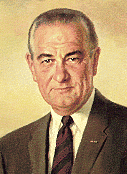
Then there was Lyndon Johnson. In 1965, during a special message to the Congress in which he quoted Walt Whitman to the effect that America was a "Nation of Nations,'' he demanded the elimination of national quotas. With bipartisan support of both Houses the President succeeded in ending 145 years of continuity in immigration law.
How could all of these men expect this nation to maintain its own peculiar ethos, which originated with the Founding Fathers and do such things as they did? The answer is simple. They didn't care as long as the corporations could get their cheap labor.
One of the best periodicals on this subject is called The Social Contract, published four times a year by The Social Contract Press, 316 1/2 East Mitchell Street, Petoskey, MI, 49770.
In the Spring, 1997 issue we find and article titled The Endless Demand for Cheap Labor, A 70 year old text with a contemporary ring. The article is actually the second chapter of a book titled America-Nation or Confusion? A Study of our Immigration Problems by Edward R. Lewis written in 1828.
The second chapter shows that the corporations demand immigration to obtain cheap labor. Then, after the cheap labor has been here for a while, they are eligible to join the American society. They now demand higher wages and refuse to work for immigrant rates. The cycle then repeats itself. All-the-while, the country is left with people with an entirely different ethos than ours. The attendant problems are so staggering in terms of safely maintaining them that we end up with, as the title states, A Nation or Confusion.
Mr. Lewis very clearly shows also that the argument that these immigrants are not brought here because native Americans will not do the work that they will. He clearly shows that if the cheap immigrant labor wasn't brought here by the greed and avarice of corporations, native Americans will be happy to do the work and have in years past before the immigrants were brought here. He writes this:
"When we are told that the foreign-born have built our railroads and subways and bridges, we have a right to answer that the assertion appears to be of a piece with most of the arguments in defense of the immigrant, and exaltation of the immigrant at the expense of the native born. It is time to say that the native born did their share likewise-a greater share than that of the immigrant. It is time to ask where we would have been without the native born.
"Likewise, to the frequent question of the free immigrationists to which they believe there is no answer, `Who would have done our common labor, who would have built our railroads, and operated our mines if it had not been for the immigrants?' The answer is simply: the native born would have done it as they did before the immigrant came and as they are doing now when not pushed aside by the immigrant.'' No wonder God said, "Be ye separate!"